Tuesday, August 21, 2007

Stardust

More than one reviewer has portrayed Stardust as this generation's Princess Bride. It's an unfair comparison that is more likely the result of lazy reviewers paying more attention to promotional materials than the film. From what I know, the only connection between Stardust and the Princess Bride is that they could both fit into the genre of fairy tale. Beyond that, Stardust has no more similarity to Princess Bride than it does to Snow White.

A better comparison is Eragon. [But Stardust is a much better film]. Like Eragon, Stardust is a coming of age story. It's the ancient formula of "Jack" the young hero who sets out on a quest as a bumbling boy and returns as a man. But Stardust adds a twist of romance to the coming-of-age formula. In fact, Stardust is a combination of fairy tale types. The romance in Stardust is the formula of the the young man who falls in love with an enchanted creature who chooses humanity for the sake of love. In this case, its Yvaine, who is a fallen star. She can survive in the mystical land of Stronghold, but if she should cross the wall into our world she will disintegrate into stardust.

The story adds yet another fairy tale theme in the form of Yvaine's desire to live among the humans she has watched over the centuries. But wait, there's still another fairy tale theme woven into this story. Tristan, our "Jack" in this complex fairy tale, is the hidden king who is the rightful heir to the throne of Stronghold.

The story is a crazy quilt of fairy tale ideas woven together nicely and without confusion. The visual magic of the film is delightful as well. The philosophy is also rich. The opening line is worth pondering:

A philosopher once asked, "Are we human because we gaze at the stars, or do we gaze at them because we are human?" Pointless, really. Do the stars gaze back? -- Now that's a question.

The philosopher may have overlooked the possibility that the heavenly creatures are in awe of the lives of mere mortals. But the apostle seemed to understand it . . .

The prophets who told us this was coming asked a lot of questions about this gift of life God was preparing. The Messiah's Spirit let them in on some of it—that the Messiah would experience suffering, followed by glory. They clamored to know who and when. All they were told was that they were serving you, you who by orders from heaven have now heard for yourselves—through the Holy Spirit—the Message of those prophecies fulfilled. Do you realize how fortunate you are? Angels would have given anything to be in on this! - 1 Peter 1:10-12

Sunday, August 05, 2007

The Bourne Ultimatum

Government must have a conscience. When government loses its soul people become materials to be used. They can be "liquidated." People can be trained to kill without guilt thus becoming "assets." It is a tidy, antiseptic, orderly world. But if anyone develops a conscience, then it all falls apart. These themes play out very well in the final installment of the Bourne trilogy. Jason Bourne's quest to discover who he is rips the lid off of the darkest corners of the nation's psyche.

I admire the fact that the villains and heroes in the world of Bourne are complex. The villains are not megalomaniacs in leisure suits. No, they are people just like any of us. Most of them are civil servants who are simply doing their jobs. They believe in what they do without fanaticism, but many of them do not take the time to reflect on the implications of their work. Of course, some of the "villains" are the assassins, or more accurately assets. They are not complex. They are barely human. They are machine-men trained to perform task without question or reflection of any sort. They wait in secluded hotel rooms for their next assignment is transmitted to them via email from a "handler." The film portrays these assets as blank robots until one compelling scene toward the end of the film when Bourne, who was also an asset, chooses to make the other killer think rather than fight. It is a powerful exchange.

Likewise, the heroes of Bourne Ultimatum are people who are atoning for the sins of their own past. They are not angels. No, they are people just like any of us. They have simply reflected on the system in which they find themselves and dare to do what is right and moral even though it may be costly.

Since we all have the choice to act as hero or villain, we ought to reflect on our choices and then do all that we can to imbue government of the people, by the people, and for the people with a conscience and soul.

Thursday, July 05, 2007

Transformers

Transformers! Robots in disguise! Transformers! More than meets the eye! I am not surprised that the filmmakers chose not to use the goofy little theme song from the cartoon. They did use one of its lines more than once; that is, “more than meets the eye.” Indeed, Transformers is a movie that truly is more than meets the eye.

I was looking forward to the movie for the simplest of reasons: giant robots fighting. It is the same internal call that draws one to a Godzilla movie. Of course the Transformers are even more spectacular than people in rubber suits destroying model cities. In terms of special effects, the film delivers quite well.

I also looked forward to the film because there is something attractive about the simple dualism of the characters. The Decepticons are here to destroy; they are evil through and through. The Autobots on the other hand are here to protect us; they are the good guys. The Transformers are more than robots in disguise, they are high-tech angels and demons who battle each other with earth in the middle. I applaud the filmmakers for not blurring that dualism.

However, there is more to the movie than meets the eye and I encountered more than I expected – for better and for worse. Firstly, for the better, I was intrigued by the story element of the All-Spark. The All-Spark is a life-giving cube that represents the creative power of a deity. It is a power that can be used for good or evil and it has landed in Earth’s back yard. The back story to the film involving the discover of Megatron in the Hoover administration, Sam Witwicky’s grandfather, and the formation of Sector Seven was clever. The motto of Sam’s family, “No sacrifice! No victory!” is an inspiring statement. It might have made more of a theme for the film, but it gets buried in the overload of the film. (Which is typical of Michael Bay’s direction).

Any of the themes could have been explored a little further to develop the human and spiritual element of the film. Of course that would mean finding more time in the film, yes? I would offer that there were a few scenes that the film could have done without, which brings me to my second “more than meets the eye” observation. Transformers includes material that is inappropriate for a movie marketed to pre-teen children. This material is not crucial to the story. I am not interested in reviewing all the inappropriate material. (Parents and conscientious movie-goers should check out movie review sites). I was caught off-guard by a PG-13 rating which only seemed to be for sci-fi violence and brief sexual humor. The so-called sexual humor was neither brief or humorous – especially when your children are with you. These moments were unfortunate blemishes on an otherwise good film. It makes one think twice about buying the DVD for the kids.

Monday, June 18, 2007

Fantastic Four: Rise of the Silver Surfer

I dig the Silver Surfer. Always have. Always will. He is an outsider. He is a stranger in a strange land. He is a philosopher and prophet. And how many super-heroes ride a surf board through space? That’s just ultra-cool.

I was concerned then when my all-time favorite comic-book hero was slated to appear in the next Fantastic Four movie. The first movie was lacking and Doctor Doom, one of the greatest comic book villains, was ruined. I feared for the cinematic treatment of Norrin Radd, the Silver Surfer. After seeing FF: Rise of the Silver Surfer I am not disappointed. The filmmakers understand the Surfer.

The Silver Surfer begins as an apocalyptic character. His arrival heralds judgment and doom. Ultimately, the Surfer is a messianic figure. He is a visitor from another world who would save us from ourselves with his unlimited power, but we of course treat him with contempt and fear.

The Silver Surfer saves earth from Galactus, the world devouring entity, by placing himself between earth and his master. This is comparable to certain atonement theories that involve appeasement of God. In these theories, Christ is the messiah who saves humanity by placing himself in front of the consuming wrath of God.

I do not think an appeasement or substitutionary theory of atonement is the only way of describing biblical atonement. It certainly is not a comprehensive theory. The comparison of Christ and God to the Silver Surfer and Galactus in this film only demonstrates the limitations of common appeasement theories of atonement. Is God a devouring force that seeks our destruction? Does Christ have to rebel against his heavenly father in order to save the world? Of course not. The biblical teaching about atonement is more about the reconciliation of a broken relationship between God and humanity than appeasement of an angry deity.

Fantastic Four: Rise of the Silver Surfer may just be a gee-whiz comic-book flick, but here I am reflecting on atonement and the Messiah. This is why I dig the Silver Surfer. He makes us think. Preach it, Surfer.

Sunday, June 03, 2007

Spider-Man 3

Spider-Man 3 is a tangled web of revenge: Harry Osburn blames Peter Parker for the death of his father. Eddie Brock hates Peter Parker for causing him to lose his job. Flint Marko is to blame for the death of Peter Parker’s Uncle Ben . . . and when Peter finds out surely he too will want revenge.

The complicated and broken relationships of the characters attract the attention of the black, oozing symbiote from outer space. The symbiote thrives on hatred, revenge, and lust. It turns Spider-Man into “Dark Spider-Man.” Later it leeches onto Eddie Brock and becomes Venom. Interestingly the symbiote does not change the host, but only magnifies the worst characteristics of the host. It is a darkness that is nurtured by sinister and selfish desires.

Spider-Man 3 gives us a brilliant depiction of sin that is not unlike the anthropomorphic description of sin in Genesis 4. In that ancient account, God warns Cain that his hatred toward his brother Abel is attracting sin to his doorstep. Sin is crouching outside waiting for Cain to open the door and let it in. God urges Cain to get the upper hand on sin lest it consume him and have its way with him. The Genesis 4 story is mirrored in the movie in a scene in which Peter is drawn to the box in the closet in which he hides the symbiote. Peter is tempted to open the box and let the symbiote consume him. As with Cain, the consequences are terrible.

Spider-Man 3 trades on the clichéd movie theme that we all have a dark side. However, this movie departs from the cliché in the way that the dark side is overcome by the heroes – and even a few of the villains. Rather than admonish us to accept the dark side or exercise enough will power to resist it, our heroes choose to forgive. Harry forgives Peter. Mary Jane forgives Peter. Peter even forgives Flint Marko, the Sandman, who is partly responsible for the death of Uncle Ben. In doing so, Peter lets go of his own guilt for Uncle Ben’s death. The rich symbolism of the Sandman fading away on the winds and the dawn of a new day is not to be missed.

Spider-Man 3 is visually exciting and magical. The storytelling remains as fun and funny as the previous movies. Unlike the first and second movies, Spider-Man 3 is more than a good versus evil morality tale. Perhaps Stan Lee would agree with me that it is a mighty Marvel pulp-fiction parable of full-color forgiveness and super-heroic spirituality! Excelsior!

Sunday, May 27, 2007

Pirates of the Caribbean: At World’s End

I admit that I did not watch the first Pirates movie very closely. I cannot recall any of the second film. So, one-quarter of the way through the latest Pirates film, particularly in the scenes with Johnny Depp and the ship in the desert, I turned to my wife and friends and asked, “What am I missing? I don’t get this.” Sadly, they couldn’t help me and it wasn’t their fault.

Pirates of the Caribbean: At World’s End is a visually stunning film. I give it high marks for its artistic magnificence. Unfortunately, it lacks the storytelling to match its spectacle. It is a disjointed adventure tale that seems to jump from one bizarre predicament to the next without any consistent plot. I felt as though we were supposed to be entertained by the egoistic posing and preening of the characters and stars. Captain Jack Sparrow and his clones proved it for me. The filmmaker’s formula seems to be “Give ‘em all the Captain Jack they stand!”

Yet, what did any of us expect from a movie series that was based on an unimpressive ride at Disney’s famous amusement park? I recall our family trip to Disneyworld in 1998. Before the Pirate’s movie one could walk right up and board the Pirates of the Caribbean ride without a wait. (The only ride that had a shorter line was this circa-1979 “Vision of Tomorrow” diorama-conveyor belt show at EPCOT. It was boring, but it was air conditioned. We rode it five times in a row.)

I am trying to redeem my viewing of Pirates and derive some sort of philosophical, moral, or spiritual message from it. I could try and wax eloquent on its vision of the afterlife or its theme of self-sacrifice, but that would be disingenuous. The truth is I spent most of the movie wondering when Keith Richards would make his cameo.

If you loved the movie I can understand why. It's a lot of fun -even if it has no plot. If you are a Johnny Depp or Orlando Bloom groupie, then you certainly must love this film. Personally, I liked the monkey better than any other character and watching him get shot out of the canon is worth the price of admission. Alas, I wish I had had a TiVo to rewind it and watch it again.
I am convinced that At World's End is the end of the Pirates series. Yet there's more "booty" to plunder from the fans and the set up for a fourth movie is all there. I do not plan to see it - unless of course they shoot that monkey from a canon again!

Wednesday, February 21, 2007

Ghost Rider

This is just a movie about a dude with a burning skull dressed in black leather and riding a wicked chopper with the wheels on fire, right? Not quite. Underlying the comic-book veneer is a message about second chances, redemption, and grace.

The spiritual elements of this film are overt. Young Johnny Blaze is tricked into a pact with the devil to save his father's life. Deals with the devil always go bad and Blaze is cursed to run errands for Ol' Scratch as his personal bounty hunter. Of course Blaze is aware of the curse long before his first transformation into the Ghost Rider. He risks his life in death-defying stunts and strangely survives as if by a miracle. Is he lucky; did his talent save him; or did he sell his soul to the devil? These are the questions that haunt and condemn Blaze. His pact with devil gains him nothing and costs him dearly. So, the question is raised (Blaze actually verbalizes it at one point), "Does a person get a second chance or does he have to pay for a single mistake for the rest of his life?"

Johnny Blaze gets his second chance by owning his mistake and turning his curse into a weapon against evil. As his mentor, the caretaker, puts it, "You made your pact with devil for the sake of loved ones, not for greed. Maybe that puts God on your side." Here is the film's only significant acknowledgement of the other side of the metaphysical coin. Otherwise the film focuses on our human struggles against the powers that oppress us. As a believer in God I have to affirm that it is the Lord's work in Christ that ultimately undoes and redeems the corrupt powers of this age, nevertheless I appreciate the film's emphasis on the human experience - even if that experience is portrayed through the imaginary tale of the Ghost Rider.

It takes grace to overcome the evil one. His oily voice is always burning in the back of our skulls convicting us of our mistakes and condemning us to an endless cycle of failed attempts at proving ourselves. He wants us to pay for our mistakes over and over until the end of our days. Once we own our mistakes and acknowledge that we have been cursed does our redemption begin. The fact that we struggle doesn't mean we have been abandoned. There's no question about it: God is for us.

"And I am convinced that nothing can ever separate us from God’s love. Neither death nor life, neither angels nor demons, neither our fears for today nor our worries about tomorrow—not even the powers of hell can separate us from God’s love." - Romans 8:38

Sunday, June 18, 2006

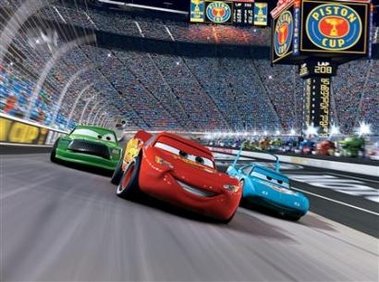
Cars

"I am speed!" So goes Lightning McQueen's pre-race mantra. Lightning is on the fast lane to success and he doesn't have time to slow down for anybody.

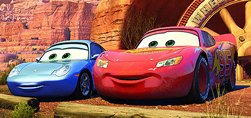
However, Lightning doesn't have much of a choice when he lands in the sleepy burg of Radiator Springs. He is forced to repair the road he demolished and during his labor he learns to slow down long enough to make friends with the other cars.

I noted in my entry on Over The Hedge that inspiration comes from the strangest of places. Here is yet another "kids movie" delivering a high-octane message for our overindulgent culture. With Over the Hedge, the theme was excess and consumerism. With Cars, the lesson of the day is time and the breakneck speed of our society that causes us to become less caring and considerate. Both movies are a much needed commentary on how the powers of greed and speed are eroding community.

There's much to commend in this film. I am always impressed by the wizards of PIXAR. Every movie they've turned out has been a winner. Unlike Dreamworks, they always work from original concepts and they immerse themselves and their movies in the concepts. Be on the lookout for Click and Clack from NPR's Car Talk. There's a variety of famous race car drivers voicing characters. Cars is filled with lore about Route 66. (I am reading Grapes of Wrath and I find it interesting that both a Steinbeck novel of the Great Depression and a computer animated film about talking cars are both drawing from the significance of the Mother Road). Pay particular attention to the scene in which Sally tells Lightning how I-40 bypassed Radiator Springs to save 10 minutes of driving time. One cannot help but wonder what we have sacrificed for speed.

By the way, don't rush out of the theatre when the story ends. You always want to stay until the very end of a PIXAR film and enjoy the outtakes and final scenes, but this time you should really just slow down and not be in too much of a hurry.

Saturday, June 17, 2006

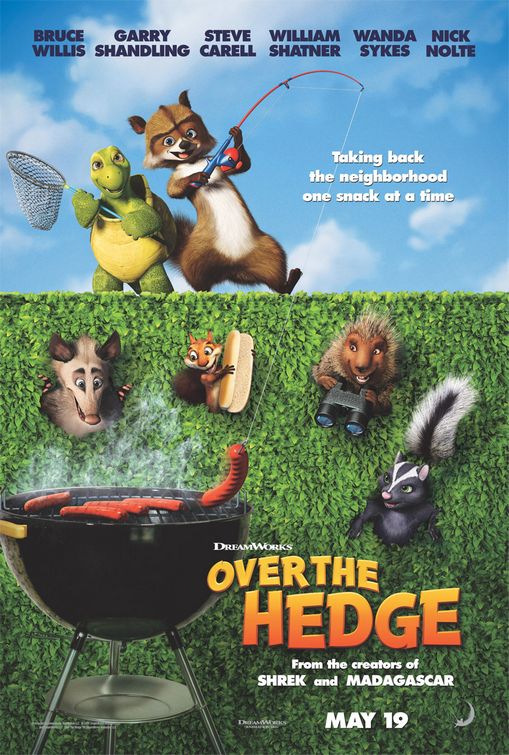
Over The Hedge

Sometimes inspiration comes from the strangest of places. Just a few weeks ago I made the decision to join meet my family at the movies. It was a decision, not a whim, because I was in the thick of a seriously overactive schedule and I had to decide that spending 90 minutes of my time at a "kids movie" like Over The Hedge was not unimportant. The 90 minutes would have been important simply because I shared it with my wife and children, but I was additionally blessed by a good movie with an inspiring message.

Over the Hedge is a parable of community. R. J. the racoon is a greedy loner who makes his way in the world by scavenging the snack foods that humans enjoy to excess. Vincent the bear also likes the goodies in a "pick-a-nick" basket, but he's no Yogi Bear. Vincent is more like Don Vito Corleone, and when R. J.'s heist of Vincent's stash goes wrong Vincent demands repayment or else R. J. becomes tasty treat himself.

R. J.'s pressure to repay the impossible debt sets the story. What follows is a multi-layered homily on community. On one layer, R. J. finds the source of easy comestibles in the El Rancho Camelot suburbs, which are just over the hedge from the forest. El Rancho Camelot and Gladys Sharp, the homeowner's association president, serve as a thought-provoking commentary on American consumerism. Do we really build our houses that big? Do we really consume that much junk? The movie doesn't preach, but one cannot fail to get the point as our over-indulgent lifestyles are not only seen from the perspective of the wee creatures, but also reflected in their anthropomorphic antics.

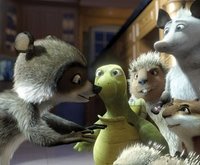
And that's yet another layer of this film. R. J. meets up with a group of friendly forest dwellers made up of a turtle, a skunk, a squirrel, two opossums, and a porcupine family. The odd assortment of beasts live together in utopian harmony as a commune community. They gather just what is needed until R. J. changes that by introducing the forest family to the possibilities of treasures over the hedge. Of course we know that R. J. is exploiting the others to gather what he needs to pay off Vincent. As would be expected, R. J. falls in love with the funny animals and finds community.

Which peels off yet another layer of this film: R. J. is revealed as a fraud but he repents by rescuing the others from the evil Verminator. In turn, the forest community rescues R. J. from the clutches of Vincent. How does a community reconcile with a betrayer? How do they restore R. J. to their community when they know he has lied to them? I realize that the movie simplifies such issues (hey, they only have 90 minutes) but I respect that the movie didn't make the reconciliation too simple. In a style that would make old Aesop proud, the animals demonstrate how community depends on forgiveness, reconciliation, and redemption. The challenge of both the offended community to forgive and the offender to repent are told beautifully.

I consider this movie to be Dreamworks' best effort to date. I applaud them for sharing their parable. Those 90 minutes were well spent and I stepped out of the theatre with an even greater appreciation and love for my family and my community of faith.

Wednesday, May 31, 2006

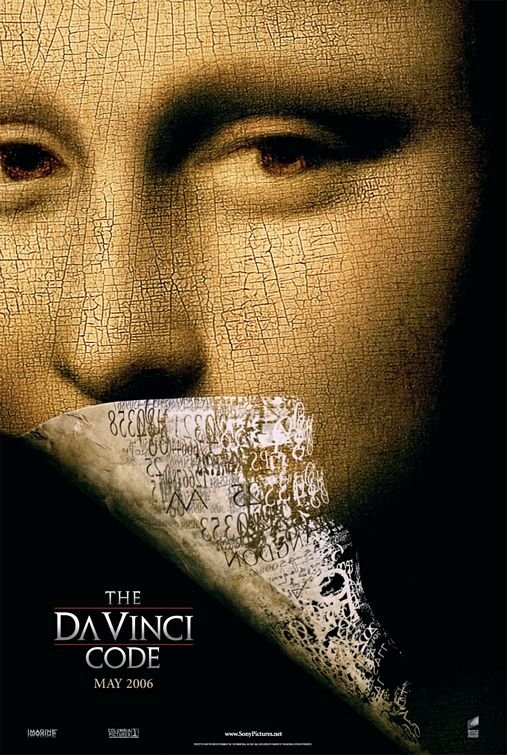
The DaVinci Code

It makes me somewhat unpopular to admit that I thought that Dan Brown's novel was weak and poorly written. My problem with the novel is not with the religious controversy, but with the fact that the characters are flat, unsympathetic, and the dialogue is stiff. If you enjoyed the book I am happy for you, but I just felt differently.

When I heard that Ron Howard and Tom Hanks were involved in the movie version I immediately predicted that the movie would be better simply because Howard is a good storyteller and Hanks is a good actor. Yet, early reviews of the movie made me think my prediction was in error. After seeing the movie I can say that it is better than the book even if it is not as good as I thought it might be.

This is not Hank's best performance, however he does breathe some life into Robert Langdon's character. The movie does a magical job of showing Landgon's almost Rain-Man ability to decipher codes. Howard used a similar effect in Beautiful Mind to show the main character's ability to recognize patterns. More importantly, Langdon provides a critical element to the movie that the book does not deliver. The Dan Brown version of Langdon affirms nearly all of Leigh Teabing's conspiratorial views. But in the movie, the scene at Teabing's house is played out with more zest because Langdon doesn't accept Teabing's conclusions without debate. He dismisses the Priory of Sion and the marriage of Jesus as myth and old wives' tales. Furthermore, he accuses Teabing of interpreting facts to support his conclusions. I loved that! Even if Langdon does accept many of Teabing's conclusions, this is the sort of critical thinking I would expect from a scholar of Langdon's stature.

Likewise Teabing and Sophie are more developed characters than their presentation in the book. McKellan's performance of Teabing is witty and devious at the same time. Sophie demonstrates more distress than she did in the book. I was disappointed by Sophie in the book. She was very dull and seemed more interested in Teabing's lecture than grief over her grandfather's murder. This is not the case in the movie and Sophie shows more emotion and is not so willing to drink the Kool-Aid Teabing serves up.

Strangely enough, the most sympathetic character in the movie is Silas, the murderous albino monk. The tragic end of Silas and his devotion to Bishop Aringarosa are explained thanks to flashbacks. Is Silas an angel or a ghost? Silas is much less the cartoon villain in the book. Nevertheless, the scenes of Silas torturing himself were overdone. Silas mutilates himself - we get it!

There's one more element that not only brings more depth to the Langdon's character but it opens the door of faith. Langdon is claustrophobic because he fell down a well as a child. He admits to Sophie that he was raised Catholic and when he was in the well he prayed all night. He believes that God's presence was with him during that experience. In addition, Sophie is able to relieve Langdon's claustrophobia with a touch. We can only assume that this because she is the descendant of Jesus Christ and she has inherited a particular family trait.

Langdon leaves it to Sophie to decide what all of this means. He tells her that what matters is what she believes. Of course this falls far short of conviction and is more akin to religious relativism, but then Langdon provides a critical question for Sophie: Would the descendant of Jesus Christ destroy faith or renew it? This is a much more positive option than Teabing's plan to tear down the oppressive reign of the Roman Catholic-Vatican hierarchy.

Of course that is the only conclusion that is allowed in the novel. The goal of the Priory of Sion is to bring down the religious oppression of the Catholic church. And as we all know, every Christian on earth accepts whatever the Roman Catholic church and the Pope says without question, right? (Sarcasm Alert!). This is the un-nuanced premise that ruined the novel for me, so I was pleasantly surprised to see some nuance brought back in to the movie.

There are some that embrace the premise of The DaVinci Code for various reasons. I can certainly understand the appeal of an alternate Christianity that undermines the authority and credibility of institutional religion. (Of course there are some who simply seek to discredit Christianity and Christ altogether). However, it isn't necessary to dismantle Christology to critique ecclesiology. In fact, the best critique of errant ecclesiology is a a sound Christology that affirms the humanity and divinity of Christ along with his earthly ministry and resurrected sovereignty. A risen Christ is present with the church and is actively involved in revealing God to the church so that humanity might become more like Christ. The resurrection of Jesus is the open door of hope.

The Christology of the novel leaves us with nothing more than the reverence of dead bones. The Christology of the New Testament affirms that that which is dead can live again. The movie leaves us stuck somewhere in-between.

Saturday, May 27, 2006

Who Makes the Most Christian Films?

No, I still haven't seen DaVinci Code and it is already so five minutes ago. In the meantime, just so you'll know that the Lantern's Light has not gone out, I invite you to read this very interesting article from Thom Parham in Godspy. This article recognizes what the Magic Lantern Show is searching for in contemporary films.

This also gives me a chance to say that the same sort of religious depth recognized in films is also prevalent in many TV shows. Have you noticed how Lost, Battlestar Galactica, Prison Break and even My Name is Earl discuss faith? If we can talk about our belief with the same depth and candor as these shows we might just make a difference in our world.

You can expect a review of some of these shows and many more in the future on Magic Lantern Show.

Friday, May 19, 2006

The DaVinci Code

The movie is released! The most-anticipated blockbuster of the summer is here. Will it be all it is hyped to be or must we wait until June and hope that Superman can save the summer? (The X-Men will be busy with their own problems next weekend).

I probably won't see the film until next week. But if you saw it, leave a comment and let me know what you thought. Don't worry - you can't spoil the plot of this one for me!

Wednesday, May 10, 2006

Relighting the Lantern

So what movie are you eager to see this summer?

Today I am meeting with Scott Smith of the Southwest Times Record. He is doing an article on The DaVinci Code and spirituality in pop culture. I am excited by the fact that after decades of trying to form a secular state and secular culture we are finding that it is impossible to avoid spirituality.

So what movie are you eager to see this summer? Can you sense the spirituality in it? Let's go to the movies and see for ourselves.

Tuesday, August 09, 2005

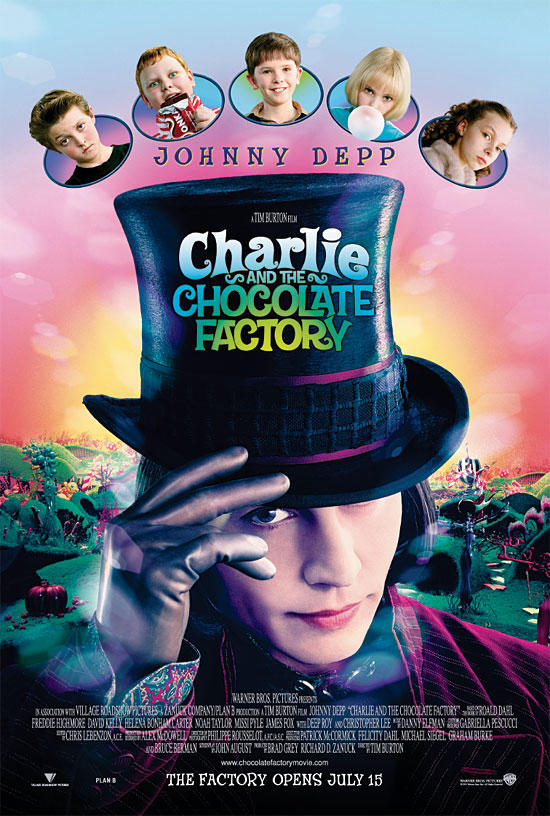
Charlie and the Chocolate Factory

Willy Wonka: But, Charlie, don't forget what happened to the man who suddenly got everything he always wanted.
Charlie Bucket: What happened?
Willy Wonka: He lived happily ever after.

So goes the closing dialogue of Willy Wonka and the Chocolate Factory (1971). This was one of my favorite movies as a child. My cousins and I constructed our very own Wonka-esque "chocolate factory" out of junk and cast-off machinery on our family farm. We penned our own lyrics to the haunting and mind-numbing "Oompa Loompa" tune. This movie is embedded in my memories of youth. As special as it is, I was never satisfied by the end of the movie.

I have a hard time dealing with Wonka's statement in the closing lines. Are we really happier if we get everything we always wanted? This statement sort of undoes the whole movie. The Oompa Loompa's have been preaching to us through their eerie little songs about the dangers of being a glutton, a spoiled brat, and a disobedient child. Why then does Wonka suddenly undermine the cinematic exhortation with his sugary dose of sentiment? I guess he is just the candyman after all.

Enough of the past, let's jump into the Way-Back Machine and return to our present day. Tim Burton has produced his own vision of Roald Dahl's story. I must say I was quite intrigued by this pairing of Burton and Dahl. The only one of Dahl's children's stories I have read is The Witches. I have read a few of his short stories for adults. (Trivia Alert: Dahl wrote the screenplay for the 007 movie You Only Live Twice). Dahl has a dark thread in his writing. Many of his short stories have a wicked, Hitchcock/Twilight Zone-style twist. (Trivia Alert 2: Dahl wrote the scripts for at least six episodes of Alfred Hitchcock Presents.) If I were looking for a director to handle Dahl's stories I would have two choices: M. Night Shyamalan or Tim Burton. If it were one of the children's stories Burton would be the clear choice.

Burton's films also have a dark thread in them, but balances the dark tones with nostalgia, camp, and cartoonish fun. The combination of Burton and Dahl is perfect in this film. Yet, before I saw it I was hesitant only because of my sentimental appreciation for the 1971 film. I admire Burton's work, but could he improve on the 1971 film? I am surprised to admit that he did - and mainly because he got the ending right!

I confess that I have not read Dahl's original story. I don't know how it ends. When I say that Burton got the ending right I mean he ended the story the way it should end. Burton's version of the story is a perfect parable for children and adults in our culture. Each of the children who win a golden ticket to Wonka's factory, with the exception of Charlie, is a token for the problems of our age. The vices of gluttony and overconsumption are embodied in Augustus Gloop. Arrogance and unbridled competitiveness are represented by Violet Beauregarde. Greed and brattiness are the sole traits of Veruca Salt. Violence and anger are on display in Mike Teavee. Perhaps these characters are simplistic, but do we really want an honest depiction of the situation. We live in a land in which we are concerned about childhood obesity while many more children starve. We live in a land in which some parents berate their children about being the best and the only attention they give their children is the coaching to succeed. Meanwhile in other parts of our land children are abandoned by parents who do not care. We live in a land in which we buy storage for stuff we do not need. We are building bigger barns to store our goods but we are never satisfied. We live in a land in which the line between reality and virtual reality is being blurred. Are violent video games just games or are they crime simulators. We live in an often greedy, selfish, competitive, angry land. In Burton's version of the story, Wonka himself is a victim of greed, selfishness, competition, and anger. Wonka has closed his factory to the public because he no longer trusts society. Instead of appreciating the artistry and goodness of his creations, the world only wants to profit off his talents. This movie also speaks quite convictingly to our consumer age.

Charlie Bucket and his family shine like stars against the darkness of the greedy, selfish, competitive, angry world conjured by Burton and Dahl's combined imaginations. The Bucket family is exceedingly poor, but they are happy. The virtues of love, kindness, and optimism rule their household. The strength and quality of Charlie's family becomes the basis for Burton's wonderful ending to the movie. I won't spoil the ending. You should see it for yourself. I will simply say that it is delightful to see a happy family win out at the end of the movie. As much as I enjoyed seeing the glass elevator fly over London to the symphonic strains of Pure Imagination, I am all the more pleased with the closing scene of Wonka and the Bucket family enjoying a good meal as family. Are we really happier if we suddenly get everything we always wanted? I applaud Tim Burton for suggesting that happiness can more easily be found with family at the dinner table.

Monday, July 11, 2005

Fantastic Four

A look at the previous post list for The Magic Lantern Show reads more like an inventory list from a comic book shop than a blog about films: Fantastic Four, Batman, Sharkboy, Star Wars. Fanboys unite! Nevertheless, these films are the hits of the summer. Why the attraction to tales about super-heroes? Is it just an opportunity to impress the kids with "gee whiz" effects and ultra-cool CGI? Or is there something more ancient and primal in tales about heroic individuals with exceptional powers?

One of the oldest stories known is the Epic of Gilgamesh. Nearly 5,000 years ago, Gilgamesh was the King of Uruk who was supposedly two-thirds divine and one-third human (did he have three parents?). His super-human adventures included a quest for immortality, fighting the Bull of Heaven, and encountering the lone survivor of the Great Flood. Gilgamesh is joined in his adventures by his comrade-in-arms Enkidu, the wild man of the forest and one of the few mortals who can hold his own in combat against the King of Uruk. Gilgamesh and Enkidu face off against the vain and capricious Sumerian gods who have little regard for humans and their cities. And now whenever the tree demon Humbaba or the sky-lord Anu and his wicked daughter Ishtar threaten the fair city of Uruk we need have no fear for Gilgamesh and Enkidu are here!

So you see that we have been telling stories like the Fantastic Four for nearly 5,000 years. Like the Epic of Gilgamesh the film asks us to consider what it means to be great and powerful. Pay attention to the conversations among the characters about power and prestige. Who has power? Is it the handsome and wealthy corporate czars like Victor Von Doom, or the fallible, flawed yet fantastic family of four who work together to champion good. This discussion of fate and using power for the greater good may be the film's most spiritual subtext.

Another light that shines in this film, albeit a bit dimly, is the virtue of family and friendship. Dr. Doom plays a satanic role in the story by using subterfuge to target the emotional character weaknesses of the four in order to turn them against each other. Ben Grimm's resentment and alienation is used to anger him against Reed Richards. Reed Richard's guilt and lack of confidence becomes his stumbling block. Johnny Storm is pulled away from the greater good by his greed, arrogance, and triviality. Susan Storm may be the team's only hope but she is frustrated for she is too often ignored as if she were invisible. To overcome their weaknesses, the Fantastic Four have to mature and learn to take responsibility for the awesome powers bestowed upon them by fate. Too bad Spider-Man wasn't around early on to give them some advice.

Don't expect the same depth and complexity available in this summer's other superhero film Batman Begins (see below). Fantastic Four is a more humorous and lighter-hearted story. Parents need to screen it for younger children. The film is marred by only a few unnecessary moments of cheap innuendo and a sampling of gory violence. Nonetheless, I hope the film does well and that a sequel is in the works. For whenever danger strikes I want to know that the Fantastic Four are ready to answer the call to action. Besides, Gilgamesh and Enkidu haven't been aswering their calls in quite a while.

Wednesday, June 22, 2005

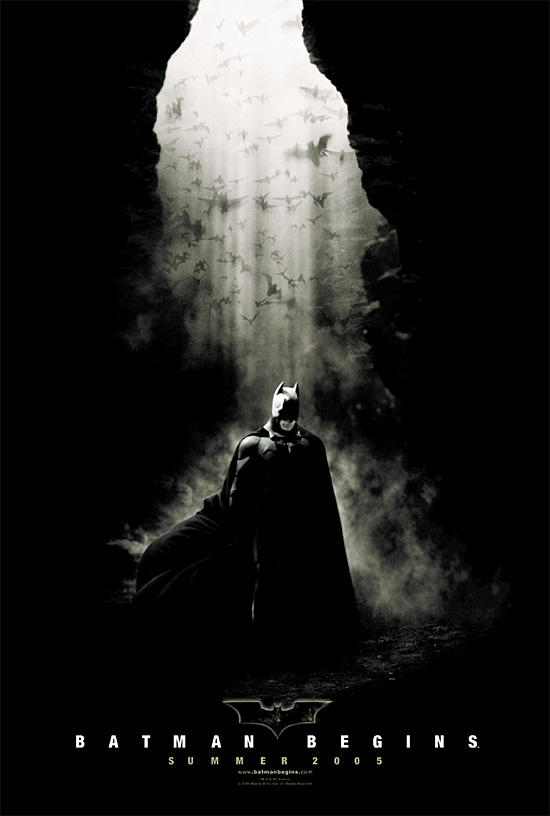
Batman Begins

Forget all you remember about the previous four Batman films. Eradicate from all conscious and subconscious thought the existence of the 1960’s TV series. This is a serious treatment of the story of Bruce Wayne, perhaps the most serious ever. Batman Begins is set apart from the earlier treatments not simply because it focuses on the characters, but it also places them in a larger framework of human and societal issues.

Batman Begins is not a particularly spiritual film, but it is a deeply human film. It addresses the human experience of fear, anger, guilt, and compassion. In the first half of the story, Henri Ducard (Liam Neeson) invites Bruce Wayne to study the martial arts and join the League of Shadows in their pursuit of justice. Yet, to join the league Ducard reaches into Wayne’s psyche. Through flashbacks we learn Bruce Wayne’s past and his fear of bats. That fear gave birth to guilt and self-hatred for the death of his parents at the hands of a common criminal. Eventually his guilt was covered over by the callous of anger and revenge. The film deserves to be commended simply for opening a balanced and introspective conversation about these problematic human emotions (see Genesis 4), but it excels in that it broadens the conversation into our societal experience of these inner demons.

Batman Begins uses Gotham City as a symbol for our society and culture. This is the most genuine rendition of Gotham City ever. One believes that it could actually exist in our world rather than only on a soundstage or an art deco poster. Gotham is a city ruled by fear and anxiety. Criminal bosses take advantage of the desperation bred by the anxiety. They keep good people from improving the society by keeping them blissfully entertained and insulated from the desperation of the criminal underworld. As one of the criminal bosses says to Wayne, “Ignorance is bliss, my friend. Don't burden yourself with the secrets of scary people.”

The unfortunate result of insulating the noble and wealthy people of Gotham from the problem is that the good people who have the power and means to make a difference do nothing. The exception is Thomas Wayne, Bruce’s father. He invests himself and his resources into saving the city. He meets fear and evil with compassion and courage. Bruce’s personal journey in the film involves his definition of justice. Does justice involve compassion, which is his father’s way, or does it involve anger and revenge, which is the way of Ra’s Al Ghul and the League of Shadows?

Bruce Wayne becomes Batman so that he can strike fear into the hearts of those who prey on other’s fears. However, in becoming what they fear he must be careful not to lose his own soul or he only becomes a meaner, nastier criminal than the other criminals. His moral compasses are his friend Rachel Dawes and his butler, Alfred Pennyworth. Rachel reminds him of the legacy of his father. She reminds him of the importance of doing the right thing, which is of greater importance than theatricality and deception. Alfred keeps Bruce Wayne encouraged when all hope seems lost but he also presses him to focus on that which matters most. Because of his good influences, Bruce Wayne becomes more than an avenger; he becomes a hero.

This discussion of revenge, compassion, and justice is extremely relevant to our social situation. Are we weak when we show compassion or do criminals deserve unbridled punishment and revenge? What does it mean to be truly fearless? Does it mean we are strong enough or clever enough to destroy any foe, or does it mean we can maintain our integrity and resolve even in the face of danger and anxiety? This film is a good dialogue for these very human issues given the situation in our Gotham City. Terrorists are brokers of fear. Those who seek to control our culture and society through politics, media, and the institutions of our society wield fear as a tool. (For another treatment of this topic read Michael Crichton’s State of Fear or peruse the following review of the book.)

Batman Begins should urge people of faith to consider the importance of compassion - how it separates us from the criminals and how it takes more courage to be compassionate than it does to be angry and vengeful. After all, what chance does Gotham have, when the good people do nothing?

Saturday, June 18, 2005

The Adventures of Sharkboy and Lava Girl in 3-D

I desperately want to see Cinderella Man. I want to see Batman Begins. I fear Crash will leave the theatre before I get to see it. These are some of the movies that I want to see, but being a parent means you sometimes go to the movies with your children. That means you sometimes have to go to a film like The Adventures of Sharkboy and Lava Girl in 3-D.

I had no intention of writing about this film, but I was hoping to be pleasantly surprised. I imagined writing an opening line such as: "I expected a juvenile special effects film but instead I was treated to a well told story rich with spiritual meaning." That is not going to happen. I would be exaggerating if I said that "Sharkboy and Lava Girl" was the stupidest movie I have ever seen, but I have seen some incredibly stupid movies in my time.

I wouldn't say that Sharkboy and Lava Girl is a bad movie. Rather I would say it is not a very good movie. It is not well made. The acting is weak. The plot and story are confusing. The emotional dynamic of the movie shifts too suddenly. I have read comic books with more drama. On top of that, the 3-D effects are poor and wasted on crude humor.

The content of the film has only a bit of redeeming quality. The theme of dreams and dreaming seemed a bit worn out at first. The story is the age-old tale of the persecuted dreamer who is told to give up his dreams and get rooted in reality. The story follows a series of events that vindicates the dreamer and the importance of dreaming. We have seen this many times before. What is unique about this film is the distinction between dreaming selfish dreams and dreaming a better dream. Better dreams are defined as those that consider the good and benefit of others. That is a noble sentiment and I appreciate the filmmaker communicating that to children.

I caution parents once again that my blog is not your best source for making movie viewing choices for your family. That is not the intent of this blog. If you see this movie, or any movie with your children, I urge you to talk with them about the film and get them to think about what they have seen and what values may have been present or missing in the film.

I understand that the filmmaker, Robert Rodriquez, made this film for his 7-year-old son. I appreciate that so much that the only reason I went to see the film was for my sons. My favorite part of the movie was well after it was over and I was enjoying dinner at Burger King with my two young film critics taking in their review of the film. Perhaps they need their own Magic Lantern Shows.

Tuesday, May 24, 2005

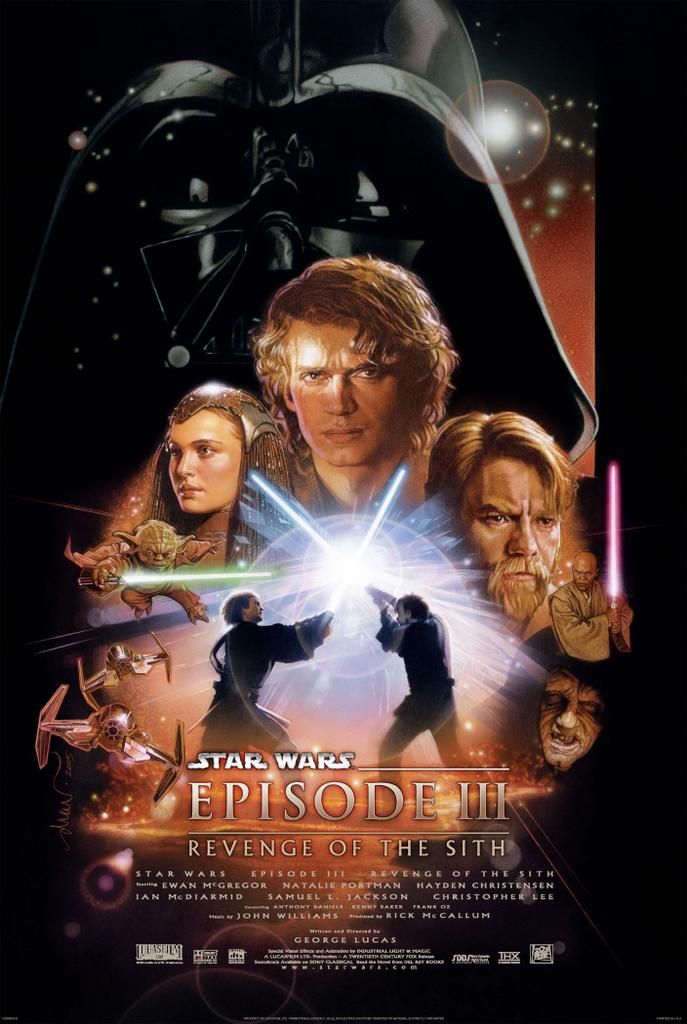
Star Wars III: Revenge of the Sith

In the 16th Century, Doctor John Faustus sold his soul to the Devil in order to gain special powers and secret knowledge. There in a nutshell is the legend told many times by the likes of Christopher Marlowe, Goethe, and most recently George Lucas. How could the considerate and clever little chap who just wanted to help in Episode I devolve into the emperor’s enforcer with the remote control chokehold we met back in 1977 (Episode IV)? How could the love struck teenager whose romantic heart ached for Padme Amidala become the monstrous destroyer of worlds who pulls the trigger on the Death Star cannon? As Episode III reveals, he made a deal with the devil.

There is no end to the critical reviews of this movie. I intend to limit my critical comments on the “magic” of this film to two wonderful uses of setting. Anakin’s complete descent into the Dark Side takes place in Hell. The planet Mustafar in all of its lava-rich digital glory stands in for the Hadean realm. The confrontation with Padme and the battle with Obi-Wan Kenobi that leaves Anakin horribly disfigured could not take place anywhere more fitting. It just wouldn’t have the same impact if it were to take place on the planet with the Ewoks. Likewise, I thought it appropriate that Palpatine/Darth Sidious should use the senate chamber as a weapon in his duel with Master Yoda. Setting is an important element in all six films of the Star Wars series, but I believe it plays a most significant role in this film where it backlights the crucial turn of the saga.

What about the "light" of this movie? What message does it communicate? The content of the story continues Anakin’s obsession with control and power which is developed in the previous films (see earlier entry). Anakin fears loss. He is filled with anxiety over a premonition of his wife, Padme, dying in childbirth. The fear motivates him to acquire power, specifically the power to save her life. The anxious need for power and control places Anakin in conflicts between doing what is right and doing what he wants. Adding to the conflict and complexity is pride. Anakin is insulted by discipline from the Jedi Council and their reluctance to trust or affirm him as a fellow Jedi. These weaknesses are exploited by Palpatine, who serves as a convincing Devil in this Faustian drama.

Anakin’s struggle is presented in one of the movie’s weaker scenes, yet it is a scene worth mentioning because it gets to the core of Star Wars theology. Anakin has a “counseling session” with Yoda in which he chats with the diminutive green sage about his disturbing dreams. The scene is weak because it plays out more like a clip from Oprah as Yoda utters his views on death and passage to a higher state of consciousness. Death, according to Yoda, is just one form of life being consumed by the "life-Force" of the universe and reprocessed into all living things. In the world of Star Wars, Yoda’s point of view is reality, but his view does not necessarily have such pre-eminence in our world. Why rejoice for those who die even if, as Yoda says, they are processed into the greater cycle of life in the universe? Do not the circumstances of death have something to do with our response to death? Arguing from Anakin’s point of view, we might ask why there is cause to rejoice when his mother is brutalized by thugs. How can one accept death as natural when it is sometimes hastened by injustice, deception, and oppression? Does Yoda rejoice when all of the Jedi “younglings” are massacred by Darth Vader?

Absent in Yoda’s view of the universe is the view of death as an enemy. This view is present in Judaic and Christian worldviews, though it is not the exclusive view of death. In the Christian worldview, it is possible to regard death as something that is not natural or willed by God; rather it is an enemy or an aberration of the natural order. Like Anakin, we may struggle with questions about death and suffering, in fact we may struggle more deeply because we question what may seem to be God’s indifference. The struggle is not easily resolved, but we are given a choice between faith and fear. Christians believe that a champion, Jesus Christ, has defanged the terrible beast called death and so we no longer have to fear it and we can actually laugh in its face. Yet, we do laugh at death because of our own power to conquer the beast, rather we rely on the power of the champion. So we vest our faith in this champion, not ourselves.

The option between faith and fear is crucial to the Christian life. Fear leads us to trust in structures of power and protection that actually lead to our downfall. Like Faust, we bargain with the Devil, even if he presents himself through his agents. Like Anakin, we bargain for secret knowledge, and even though our intentions may be just, we may be tempted to pay an unjust price for the power and protection. Self-preservation masquerading as self-sacrifice is masterfully portrayed in Episode III. On Mustafar, Padme pleads for Anakin not to continue his descent into evil. He replies, “I'm doing this for you, to protect you.” To which she replies, “Anakin, you're breaking my heart!” Is Anakin really trying to save Padme, or is he trying to save himself? Is he taking a stand against the enemy or is he sheltering himself from a power that he fears could destroy him? Ironically, it is Anakin’s efforts to protect Padme that lead to her ruin and his.

The Bible is rife with stories of people who try to devise their own solutions for power and protection. They build towers, arrange for the birth of heirs, negotiate with rulers of other nations, construct religious strictures and structures, and execute prophets and messiahs who threaten their sense of safety. Ironically, these solutions become the mode of suffering and loss. Yet, God works in these disasters to bring forth new hope.

I have many other thoughts on the story that unfolds in Episode III. I am interested in the theme of trust and relationships. I am interested in the inconsistent approach to absolutes and complexities that is most apparent in this film but also prevalent in the six-part saga. I hope to share these reflections, but in the meantime, what do you think?

Thursday, May 19, 2005

Star Wars I: The Phantom Menace and Star Wars II: Attack of the Clones

No, I didn't stumble into the wrong theatre. I know that Episode III: Revenge of the Sith premiers today. Of course if you are among the loyal fans you've already seen the third episode twice. It has been playing somewhere since midnight. I drove by the Malco 12 last night and waved at our representatives from the Jedi Order who have been waiting in line since days ago. I have been watching the previous films in preparation for the next episode, and since I will not be among the first to see this movie I thought it appropriate to go back and reflect on the Star Wars story thus far.

The entire Star Wars story focuses on Anakin Skywalker. I remember hearing George Lucas say that the series could be titled "The Rise and Fall of Anakin Skywalker." Those of us who were initiated into Star Wars around 1977 only knew Anakin as Darth Vader (Oops! Spoiler Warning - Anakin becomes Darth Vader - as if you didn't know!) In the final episode we learn that there's a man behind the mask, even if he is a rather mangled man. Anakin's final act is redemptive as he takes down the evil emperor and saves his son, Luke.

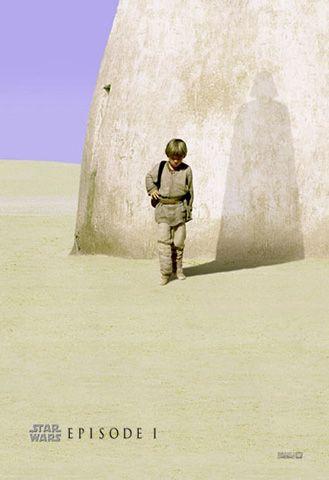
Despite all this, Darth Vader is never a very sympathetic character in the earlier trilogy (Episodes IV - VI). He has no facial expressions and he sounds like James Earl Jones speaking into a empty Folger's can. He is just the bad guy; and as far as villains go he is one of the best. With the first three episodes however, we are introduced to the man behind the mask. We meet him as a little boy in Episode I and even though it is probably the least of the six films, we are confronted with the fact that the murderous dictator in his black Nazi-helmeted mask was once a child with dreams.

I found it difficult to believe that this clever young child was the seed that would sprout into the Dark Sith Lord. I can only guess that Lucas' intent was to show that Anakin starts off as good. I was expecting more explanation of the circumstance that tainted this child. The elements were there and I think it would have been quite moving if the film had keyed in more heavily on the fact that Anakin and his mother are slaves. They are among the oppressed and they suffer a cruel injustice that the grand Republic and its super-powerful Jedi seem to ignore. Anakin's contempt of slavery is displayed briefly in dialogue between he and Padme in Watto's shop. Unfortunately, Jar-Jar Binks gets in the way with an unnecessary gag. Later, in a scene on the royal space cruiser, Anakin again speaks to Padme and expresses his desire to get away from his home planet. If these scenes had been played stronger to communicate more of the injustice that Anakin and his mother, Shmi, had experienced perhaps we could have witnessed a more vivid portrayal of how violence begets violence, oppression leads to revenge, and indifference toward injustice creates consequences for all of us.

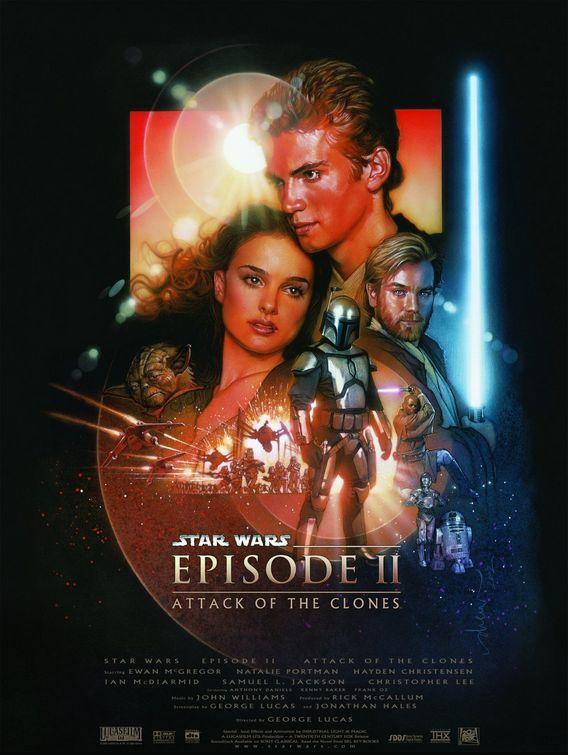
The other struggle that leads Anakin to the Dark Side is his desire for control. This is more masterfully portrayed in Episode II. Anakin, now older and edgier, returns to his home planet to save his mother. She has been kidnapped and tortured by raiders. He finds her in the raider camp and spends only a brief moment talking to her before she dies. The failure to save his mother sends Anakin over the edge and he kills every raider in the camp, including the women and children. I applaud Lucas for not showing the massacre but instead focusing on the internal struggle in Anakin. This is revealed in a conversation between Anakin and Padme in the Lars family workshop. Anakin reflects on his childhood and on how he loves to fix things. Life is much simpler when one is fixing things. He expresses his rage over his failure to save his mother. He fumes at Padme because he is not all-powerful. (Padme: "You are not all-powerful." Anakin: "Well, I should be!") Anakin is full of hubris and a desire for ultimate control when he utters his fateful boast: "One day, I will become the greatest Jedi EVER. I will even learn how to stop people from dying." Both the actors play their parts well: a young man tortured by anger, self-condemnation, and limitations; a young woman frightened by the dangerous intensity of his rage.

This glimpse into the man behind the Vader mask is a very human, very real moment. Forget for a moment that it takes place a long time ago in a galaxy far, far away. In truth this struggle plays out in the ghettos of our cities. It plays out in office buildings, in highway traffic, in the bedrooms of suburbia, on school playgrounds, and even churches. How many well-intentioned leaders have destroyed men, women, and children simply because they wanted to "fix things." How often are any of us consumed by anger that grows from our frustration because we cannot control our circumstances?

Every time I watch this scene I am reminded of the Genesis 4 story of Cain and Abel. Sin crouches at the door waiting for us to open it just enough that it can gain entry into our lives. It does not announce its arrival with a disclaimer that it is capable of maiming us physically and spiritually and that it will destroy our relationships with others. Rather, it calls promising to give us the ability to "fix things" quickly and that it will establish control. This scene masterfully captures the cycle of anger and frustration and the desire to control that has been the downfall of many good people.

I anticipate that this theme will be continued in Episode III. It will certainly be the theme that catches my attention. So, what do you think?

Wednesday, May 18, 2005

What's In A Name?

A question that no one in particular asks is: "What does the title Magic Lantern Show mean?" This is a very different question than "What is a Magic Lantern Show?" For the answer to that question, I urge you to do a Google search or take a look at this rather informative website from the Magic Lantern Society. (Yes, I know it sounds like something from a comic book).

I chose the name The Magic Lantern Show for a variety of reasons. I originally tried to get the word "cinema" into the title since the purpose of the blog is to dialogue with films. Nothing inspiring came to mind. I am a history buff and when it comes to pop culture I dig all things retro, so I thought about using archaic terms for films and movies. The ancestors of the modern cinema are devices such as the camera obscura and the magic lantern. The camera obscura is perhaps more closely related to the cinema, but camera obscura sounds like a photography club for Satanists. I would guess that the Magic Lantern is more accurately an ancestor to those fimstrip projectors most of us over 35 remember from the school library. The ones that would ping or make a tone telling you when to advance the roll of film. You may also recall when the noble filmstrip projector was recruited into the service of the Jule Miller filmstrip series. They not only entertained; they educated and evangelized! Yet, this is not the main reason I settled on the name The Magic Lantern Show.

For me, the three words that make up the title (once again "the" goes unnoticed) evoke the three dimensions of faith and film and dialogue. The Magic speaks of the artistic qualities of movies. In his comment to my comments on Hitchhiker's Guide, CJR observes that it is legitimate to engage and understand film simply on an artistic level. I agree. In the modern worldview, values and characteristics such as beauty, wonder, goodness, and humor have been ignored by an unbalanced preference for reason. One of the reasons that the cinema may be the location for the 21st century conversation about God and spirituality is becuase the cinema does not ignore that there is a magical and mysterious quality to human life. So, our Lantern Show is Magic.

The word Lantern connotes light. I find it interesting that despite our advances in technology that have witnessed quantum leaps in media and communication, movies are still projected with a really bright bulb. However high-tech the movie biz becomes, everything from 8mm to IMAX is essentially a lantern. Yet, I am interested in more than the photonic sort of light. Sometimes a spiritual light shines forth in a film. One may even perceive that light coming from the most unexpected of films. When Changing Lanes came out to theatres, my wife and went to see it. We expected an action thriller from a film starring Ben Affleck and Samuel L. Jackson. Instead we discovered a rather thought provoking commentary on human society, covenant, and faith. Karen said it best at the end of the film when she turned to me and said, "That will preach." Movies that shed this sort of light on our murky world deserve to have their light examined with the lenses of our faith or filtered through our spiritual prisms so we can separate the colors of Christ and the colors of culture. Our magical show we call the movies is indeed a Lantern shining its light for better or worse.

The third dimension is the Show. Movies are still a communal phenomenon, even if they are sold on DVD's and VHS. I appreciate the fact that I still have to make a social commitment to "go to" the movies even though I am not always happy about the rather anti-social behavior of some of the fellow patrons of the theatre (turn off those cell phones people!). The Show dimension is the broadest dimension. It includes everything from a film's impact on popular culture to its appreciation among a small cult following. It may even have to do with the experience of going to a film and watching it with others. For example, most of the reporting about Star Wars Episode III will focus on this. Notice how many stories are about the Jedi-garbed fans standing in lines for hours versus the content of the film. When the content of the film is discussed it will focus on how disturbing the film is for younger viewers. This sort of reportage really isn't about the art or the spirituality of the film. Remember this as an example of my point that our magical lantern light is also part of a Show.

So there are the three dimensions specifying the art, beauty, awe, humor, faith, emotion, provocation, culture, and community created by and reflected in films. That is the reason it is called the Magic Lantern Show.